I've worked in the indoor amusement park industry for 15 years. During that time, I've witnessed investors lose money, often forced to scale back operations or postpone openings even before a single ticket has been sold. The root cause is always poor equipment procurement: buyers fail to recognize the crucial difference between direct manufacturers and the middlemen behind the carefully crafted site.
Building an indoor playground requires significant capital. You're planning to invest in this project, and your primary goal is to achieve a safe and high return on investment (ROI). However, if you're unclear about the relationship between the playground equipment factory and the trading company during the procurement phase, you face a serious risk of budget leaks from day one. My goal is to break through marketing barriers. I'll show you in detail how the source factories operate, where hidden markups drain your budget, and how to protect your investment. Here's the truth about operations directly from the factory.
The 20%–60% Price Illusion
The standard business model of a trading company relies entirely on price arbitrage. They do not own the machines, they do not buy the steel, and they do not hire the welders. Generally speaking, a middleman will add a 20% to 60% markup to the factory's base price.
Let’s look at your balance sheet. If the true factory cost of your equipment is $100,000, a trading company will quote you $120,000 to $160,000 for the same layout. They know you will not accept a massive line item labeled “Middleman Profit.” So, they disguise this markup. On your quotation, this price difference is easily camouflaged under vague terminology. They will call it a “comprehensive project management fee,” an “independent quality inspection fee,” or “overseas installation guidance” or simply wrap it up as a “brand premium.”
You look at the invoice and think you are purchasing premium, extra services that will secure your project. The reality is entirely different. You are buying the same set of physical equipment that my factory produces. The steel and plastic do not change. You are just paying a massive premium to a trader who merely passes the purchase order to us. That 20% to 60% should have been your operating cash flow for your first year in business; instead, it becomes the trader’s profit margin.

The Danger of “Infinite Design Revisions”
Many traders will promise you “infinite design revisions” to secure your deposit. Salesmen in air-conditioned offices love to make this promise because it sounds incredibly accommodating to a new buyer. This is a false promise that completely ignores the reality of physical manufacturing.
Before the design drawing is finalized and put into production, yes, we can modify the layout according to your reasonable requests. However, once the design is confirmed and enters the production line, changing the drawing is impossible unless our factory engineers discover an unreasonable design flaw that requires minor technical adjustments. Real manufacturing follows a strict, irreversible sequence: Design → Engineering Breakdown → Material Cutting → Production → Packaging. Once your project enters the engineering breakdown stage, the blueprints are converted into machine instructions, and the raw materials are actively being cut. The layout is locked.
If a trader forces a late modification simply to please you and save their commission, it triggers a chain reaction of mechanical failures. Forcing changes at this stage easily leads to compressed safety clearances to make the new parts fit. Your required safety buffer zones—especially around high-velocity slide exits and high-impact trampoline park areas—fail to meet minimum safety standards. On top of the severe safety risks, a major delay in your construction schedule is the inevitable result, pushing back your grand opening and costing you daily rent.
The Fake Certificate Roulette
You need CE, ASTM, or TUV certificates to pass your local fire and safety inspections. Without them, you cannot legally open your doors.
The reality in the industry is that 30%-50% of the certificates held by traders are borrowed or fraudulently obtained. Traders take our legitimate factory testing certificates. They use Photoshop to erase our factory name and slap their company header onto the document. It looks official. It works right up until the local fire marshal or safety authority does a hard site inspection. When the inspector pulls the serial numbers, checks the international database, and realizes the paperwork is forged, your park gets shut down immediately. You face fines. Your insurance is voided.
As direct family entertainment center manufacturers, we own our testing data. We pay for the lab tests. Our name is permanently stamped on the paperwork. It is bulletproof.
The Split-Production Installation Disaster
This is the phase where traders make their most costly and destructive mistakes. After you confirm the drawings and place the order, some traders will split the equipment components of a single venue and send them to different factories for production.
To maximize their own profit margin, they do not use a single, unified manufacturer. They buy the galvanized steel parts from Factory A because it has the lowest metal price this week. Then, they purchase the soft padding equipment from Factory B, a completely unrelated supplier. They buy everything separately and ship it to you.
When it is time for installation at your site, this approach is highly likely to cause major disasters. The bolt holes do not align—this is the absolute most common failure. The structural tolerances are totally inconsistent. The soft padding sizes deviate from the metal frames, leaving dangerous gaps or requiring your installation team to force pieces together. Your installation team, whom you are paying by the hour, cannot put the equipment together. Your labor costs skyrocket while the crew stands around waiting for metal to be re-drilled and modified on-site.
Invisible Material Shrinkage
Trading companies constantly force factories to lower their wholesale prices. To survive the trader's price cuts, the factory has no choice but to reduce the materials. You cannot see this material degradation on a 3D drawing, but it will absolutely destroy your operational ROI.
Let's look at the facts:
Galvanized Steel Pipes: The industry standard for safe, load-bearing indoor structures requires steel pipes that are 1.5 mm to 2.0 mm thick. Traders will secretly instruct the factory to push this down to less than 1.2 mm to save weight and cost.
PVC Leather: The standard thickness for durable soft padding is 0.45 mm to 0.55 mm. Traders will substitute this with sub-0.4mm PVC.
What happens when you open? The lifespan of your equipment drops off a cliff. Under the dynamic load of fifty running kids, the 1.0 mm steel bends and warps. The thin PVC leather tears within three months, exposing raw foam. Your maintenance costs skyrocket. You are constantly replacing broken parts. Worst of all, structural failures lead to injured customers and lawsuits. If you are serious about finding high-quality indoor playground equipment for sale, you have to control the raw materials. Only a factory controls the steel.

The Fake Factory Tour
If you are a serious investor and demand an in-person visit to verify your supply chain, traders have specific tactics to hide their identity. Usually, they will temporarily borrow a factory from a supplier they buy from.
They will meet you there, pretend they own the facility, and they will only take you to see a clean, controlled “sample area.” They will deliberately avoid taking you into the actual production workshops where the real manufacturing logic is happening.
The method to break this illusion is direct and requires you to take control of the tour. Demand to see their raw material inventory. Ask to see the racks of steel pipes and rolls of PVC. Ask to visit the finished goods workshop to see how equipment is staged before shipping. A real factory operates in the open and is proud of its production floor; a middleman will always find an excuse—citing “safety rules” or “trade secrets”—to keep you out of the working zones.
The Container Loading Tax
Shipping efficiency directly impacts your bottom line. International ocean freight is expensive, and shipping empty air is a massive waste of your budget.
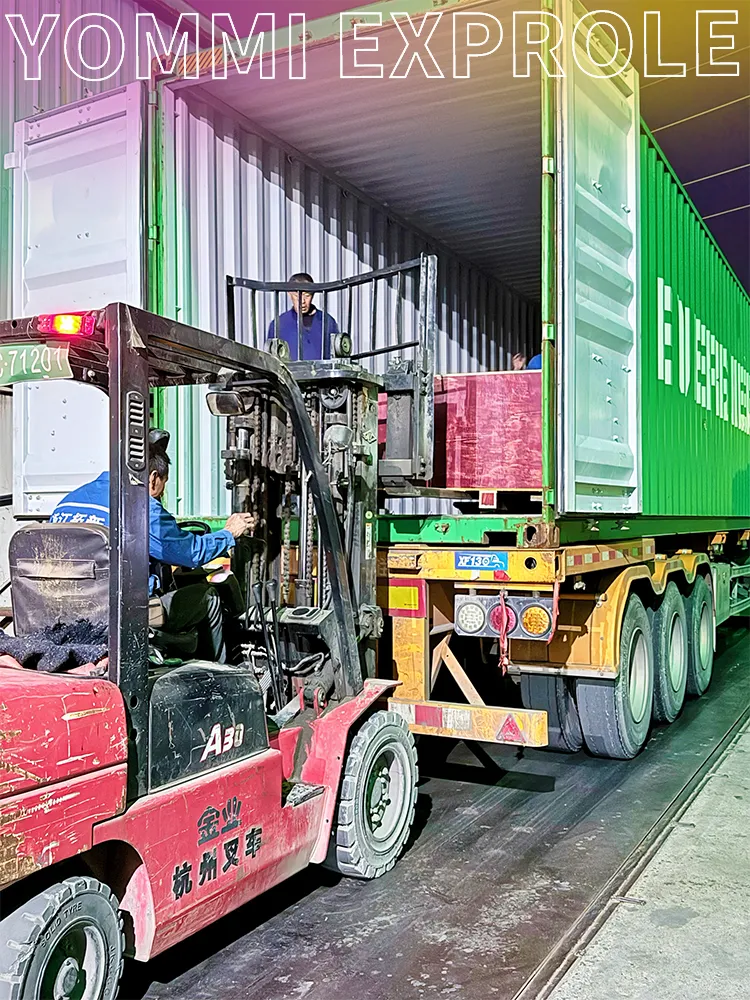
Regarding container loading utilization, a direct factory has dedicated structural engineers who disassemble the equipment based on logical engineering principles. Our utilization rate is exceptionally high because we designed the structures to pack efficiently. Furthermore, we have professional, experienced loading masters who will guarantee that every single inch of the container space is fully utilized.
A trader shipping scattered goods from Factory A and Factory B cannot plan a container with this level of engineering precision. They just load random boxes until the container is full. This inefficiency severely drops the loading rate, often costing you extra in wasted freight space, or worse, forcing you to pay thousands of dollars for an additional shipping container that you would not have needed if you bought direct from a factory.
The After-Sales Black Hole
Equipment requires maintenance. Commercial playground equipment takes heavy abuse daily. In after-sales issues, the response speed of a direct factory is significantly faster than that of a trading company. Because we built the equipment, the factory can directly dock with you. We confirm the exact problem, pull the exact CAD files, and process the after-sales solution immediately. A trading company forces you into a painfully slow communication loop. They must relay messages back and forth between you, their office, and the actual manufacturer.
More importantly, the actual engineering data, production files, and specific part tolerances are only held by the factory. The critical difference here is that the trader is merely relaying your problem. They have zero product inventory in their office and zero technical judgment to actually diagnose the issue. While they spend days translating emails, your flagship slide or mechanical equipment remains broken, wrapped in caution tape, damaging your reputation with your customers.
Sales-Grade FAQ: Objection Handling
Q: Can a trading company offer better customer service because its sales reps speak perfect English?
No. Language skills do not fix broken steel and shattered plastic. My Experience: I have dealt with this misconception for 15 years. You do not need a conversationalist; you need a structural engineer. Traders might sound incredibly polished and friendly on a Zoom call, but when your main slide fails a local safety inspection, their perfect English will not save you from a shutdown. Modern, large-scale factories have dedicated, fluent export sales teams who actually understand structural load-bearing limits, torque specifications, and CAD engineering. We solve technical problems; traders just apologize in fluent English.
Q: Is it cheaper to buy from a trading company because they aggregate multiple orders and get volume discounts?
Absolutely not. You are always paying their operational markup, no matter what lies they tell about volume.
My Experience: I know exactly what they pay the factory, and I know exactly what they charge you. Any “volume discount” they claim to negotiate is entirely eaten up by their 20% to 60% profit margin. Worse, to get you that supposedly “cheap” quote, they secretly instruct the factory to use thin (<1.0 mm) steel and weak PVC. You might pay a little less on the first invoice, but your maintenance and repair costs will bankrupt you in year two. You are paying for their profit, not your discount.
Q: If I demand an in-person visit, can I trust that the trading company isn't faking the factory tour?
Only if you take control of the tour and demand to see the raw material logistics.
My Experience: Traders rent our showrooms all the time to fool foreign buyers. They will hand you a business card that says “General Manager” of a factory they do not own. The easiest, most aggressive way to expose them is to ask highly technical questions about the CNC cutting machines on the floor or demand to see the galvanized steel pipe inventory. Ask them to show you the scrap metal bins. If they panic, stutter, or try to steer you back to the air-conditioned office for tea, your money is in extreme danger. Leave.