Don't believe those fancy brochures and fake tech blog posts. I recently saw a trampoline park business plan claiming their equipment was certified to the ISO 14971 risk management standard for medical pacemakers and had received a DxOMark rating for smartphone cameras. If you include this in your investment plan, any reliable insurance claims adjuster or safety inspector will immediately see through your ignorance and refuse to issue you a license.
I have over ten years of experience in the trampoline park industry. The commercial trampoline parks I've built withstand intensive use by teenagers, rigorous safety inspections, and stringent insurance audits. I have detailed factory data. If you want to start an indoor trampoline park business but don't want to be in debt for safety issues, then you must understand the real key performance indicators (KPIs).
Below is the absolute, unfiltered truth about trampoline park safety standards. I am going to expose exactly how cheap suppliers cut corners, why parks fail inspections, and the exact manufacturing specs you must demand.
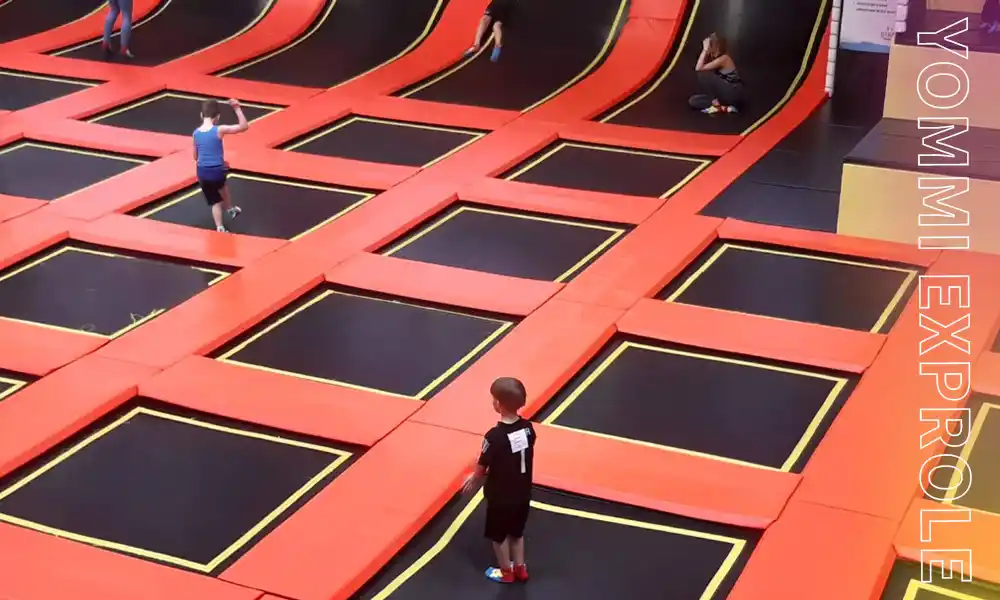
The Certification Reality: ASTM, EN1176, and The Big Two Labs
Stop listening to middlemen throwing random acronyms around. In the global commercial indoor playground and trampoline industry, there are only two absolute core safety standards you must respect.
The US Commercial Mandate: ASTM F2970. (U.S. commercial trampoline mandatory reference)
The European Golden Standard: EN1176 (European Gold Standard)
But a standard is just a piece of paper unless a legitimate third-party laboratory verifies it. In our factory, the two most authoritative testing bodies we actually use to clear customs and pass insurance are TÜV Rheinland and SGS. Here is the global breakdown you must memorise: If you are building a park in the USA, you must look for ASTM compliance backed by an SGS test report. If your client is in Europe, they demand TÜV Rheinland reports verifying EN1176. If you are operating in Southeast Asia, SGS reports are the most commonly recognised. Do not accept random factory self-certifications. They are legally worthless.
The Steel Frame Lie: Tube Diameter and "Fake Thickness"
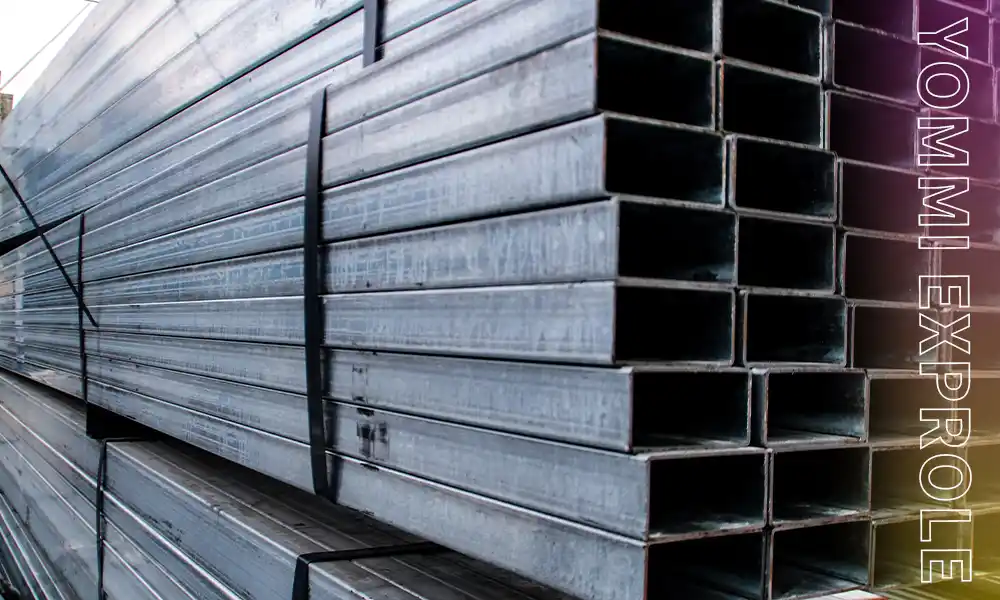
The frame is the skeleton of the trampoline. If the frame breaks, it can cause a safety accident. Commercial trampolines that meet ASTM standards must have main uprights made of 80×80 mm galvanised square tubing. More importantly, the wall thickness must be strictly ≥ 2.0MM.
How do cheap suppliers cut corners to offer you a "discount"? Two ways. First, they skip the anti-rust treatment. A proper factory executes rigorous grinding and heavy anti-rust treatment on every weld. Cheap factories weld bare metal and ship it. Inside a sweaty, humid trampoline park, the steel rusts from the inside out, drastically reducing its structural strength. Second, they use "fake thickness." They quote you 2.0mm, but they actually use 1.5mm or 1.8mm steel. Under the dynamic load of 50 people jumping simultaneously, a 1.5mm frame flexes, warps, and eventually cracks. You will not see it under the safety pads until it is too late.
Safety Pads: The Real Metrics Behind the Foam
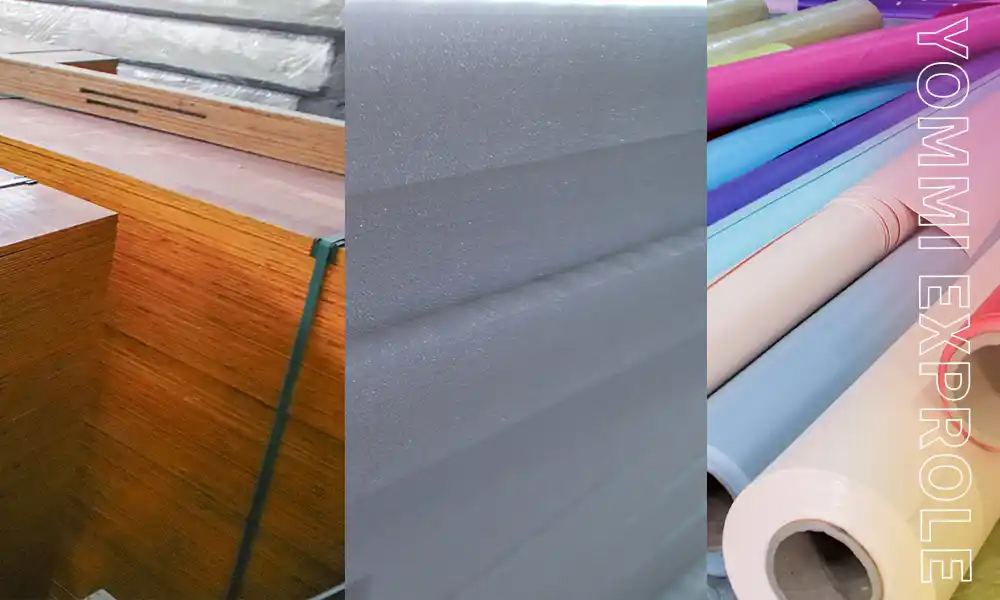
Here is the real standard for normal free jump trampoline safety pads: the thickness must be strictly greater than 5cm (about 2 inches). For high-performance professional trampolines, the pad thickness must be greater than 8cm. But listen to me closely: thickness is not the core issue. The absolute core requirement of trampoline park safety standards is that the pad must never expose the internal materials, it must leave zero gaps where a foot could slide through to hit the springs, and it must never collapse when stepped on.
Cheap pads use low-density sponge and cheap plywood. After two months, they compress and warp. In our factory, we build pads using high-density EPE foam backed by architectural-grade red board. The heavy-duty PVC skin must entirely cover the wood and foam. This architectural red board prevents moisture rot and extends the lifespan of the pad by years.
Jumping Mats and The V-Ring Connection
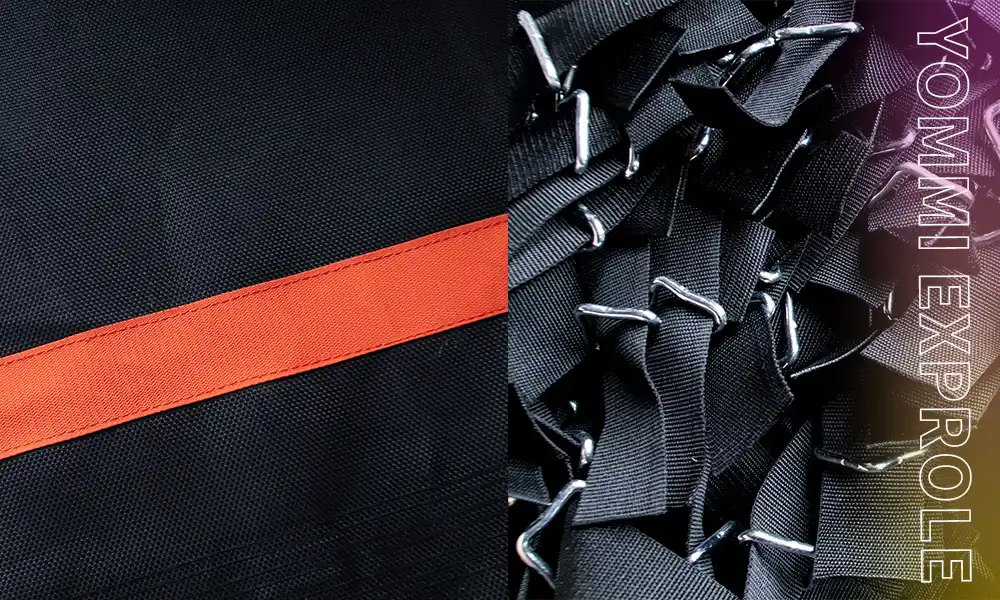
Your jumping mat is where the kinetic violence happens. A standard commercial free jump mat must be made of high-strength PP material.
To survive a commercial environment, the edges cannot just be stitched normally. They must use heavy-duty V-ring triangular buckle connections. Our factory mats are TUV certified, heavily UV-resistant, and entirely waterproof. We double-reinforce the stitching around the V-rings because if a stitch tears during a bounce, the jumper goes straight through the floor.
The Heartbeat of the Bounce: 80# Manganese Springs
Bounce quality does not come from the mat; it comes from the springs. There are generally two types of spring materials used in this industry: high carbon steel and manganese steel.
For our standard commercial trampolines, we strictly use 80# Manganese Steel galvanised springs. Manganese steel has incredible memory retention; it snaps back to its original shape even after millions of cycles. For professional Olympic trampoline zones, we upgrade to professional sports springs with thickened corners at all four anchoring points to handle the extreme kinetic force of an adult performing a 15-foot high double flip.
Foam Pit Engineering: Density 40 is Non-Negotiable
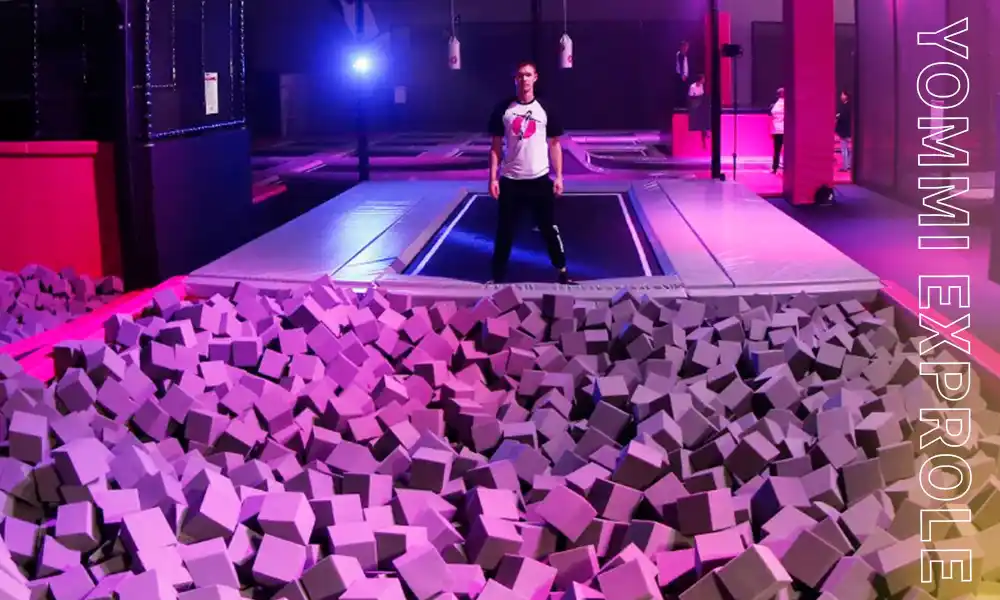
Foam pits look soft, but they are the most dangerous zone in a park if engineered incorrectly.
Underneath that foam, our factory installs a galvanised steel frame measuring 40×40×2.75MM. It is heavily treated for anti-corrosion and anti-ageing. Over this frame, we build the pit walls using multi-layer architectural red board—which is strictly moisture-proof and fire-proof—padded with TUV-certified soft wrapping. At the bottom of the pit, you cannot just throw foam blocks on hardwood. We install high-density EPE pearl cotton wrapped in flame-retardant PVC skin.
Finally, let's talk about the foam blocks themselves. You must use foam blocks with a density of 40. If you try to save money by using cheap 20-density foam blocks, a heavy adult jumping into the pool will instantly compress the inferior foam to zero, leading to a safety accident.
The Insurance Guillotine in the US Market
If you operate in the United States, your entire business survives at the mercy of insurance underwriters. If your equipment does not strictly comply with ASTM F2970, there are only three brutal outcomes for your business:
Direct Rejection: The insurance company refuses to cover you. You cannot open your doors legally.
The Premium Spike: High-risk underwriters might take you, but your annual premiums will increase by 2 to 5 times. This premium spike will destroy your profit margins.
The Denied Claim: You buy cheap insurance, a child is injured, the insurance inspector discovers your steel frame is 1.5mm instead of 2.0mm, and lacks ASTM certification. They deny the claim. You face a multi-million dollar lawsuit and lose your personal assets.
The "Upgrade" Trap: Why 80% Must Rebuild
Investors often call me crying. They bought a cheap park locally. It failed inspection. They ask me: "Can I just keep the steel frame and buy your certified springs, mats, and pads to pass the audit?"
Here is the financial reality. If you keep the original frame and only replace the springs, mats, and soft pads, the material cost will roughly account for 40% to 70% of the original build cost.
But there is a fatal reality problem: The original cheap steel frame usually does not meet the standard. It is structurally compromised. Even if you put our world-class mats on it, the inspector will measure the steel and fail you anyway. The result? Ultimately, 80% of these clients are forced to tear down the entire cheap structure and completely rebuild from scratch. Do not buy twice. As top-tier trampoline park manufacturers, we build it right the first time.
Warranties That Protect Your Cash Flow
A factory that cuts corners will give you a 6-month warranty and disappear. You must demand hard warranty timelines in your contract to protect your operational cash flow. Here is our factory standard, reflecting true confidence in our materials: Main Steel Frame: 5 Years, Standard, Jumping Mats: 2 Years, Foam Pads: 1 Year, Galvanised Springs: 1 Year.
In conclusion, the survival of your trampoline park relies entirely on uncompromising physical materials. Stop chasing fake digital ratings. Focus on 2.0mm steel, 80# manganese springs, and verified SGS/TÜV reports. That is how you build an empire.
Hardcore B2B FAQ
Q: Can I use EN1176 or ISO certifications to pass an insurance audit for a commercial trampoline park in the United States?
No. If you are building a park in the USA, you must specifically have ASTM F2970 compliance.
My Experience: I constantly see European or Asian middlemen trying to sell EN1176 equipment to US buyers. While EN1176 is the golden standard in Europe, US insurance underwriters and local city inspectors only care about ASTM F2970. If you hand them a European certificate, they will reject your permits or spike your insurance premiums by 2 to 5 times. Always demand ASTM compliance backed by an SGS test report for the US market.
Q: If I bought a cheap park that failed inspection, can I save money by keeping the steel frame and just upgrading to your certified mats and pads?
This only works if your existing steel frame is indeed 80x80mm in size and 2.0mm thick, which is extremely rare for inexpensive assembly.
My Experience: Clients try to do this all the time to save money. Upgrading just the soft parts costs 40%–70% of the original build. However, the fatal reality is that the original cheap frame usually uses fake 1.5mm cold-rolled steel. The safety inspector will measure the steel, see that it doesn't meet standard load-bearing requirements, and fail the park anyway. In my experience, 80% of these clients are forced to tear down the entire structure and completely rebuild.
Q: Are thicker foam pit blocks always better for jumper safety?
No. The density of the foam block is far more critical than just the size.
My Experience: Amateurs may purchase large foam pads, but choose low-density foam blocks (e.g., density 20). When a heavier adult jumps from the trampoline into the pool, the low-density foam will compress to zero instantly, leading to a safety hazard. Density 40 foam blocks must be used. Furthermore, we always lay a layer of high-density EPE foam on the red construction board at the bottom of the pool, and then wrap it with PVC to ensure that there is no hard impact to the bottom.