.webp)
Stop looking at fairy-tale templates. Most investors fail before they even cut the ribbon because their indoor playground business plan is built on blind optimism and fake numbers. They write down a budget, dream about instant profits, and completely ignore the brutal physical and financial realities of this industry.
I've spent ten years in the indoor playground equipment industry, designing and building every type of commercial indoor playground imaginable. I have seen clients build empires, and I have watched others lose their life savings because they ignored basic metrics. I don't do theory; I only focus on practicalities and real money. If you want to open an indoor playground, you must abandon all illusions and carefully examine the raw data.
Here are 10 unvarnished truths you must follow to form your business plan. I present all these truths to you. Please read carefully.
The Budget Trap: Equipment Is Not Your Total Investment
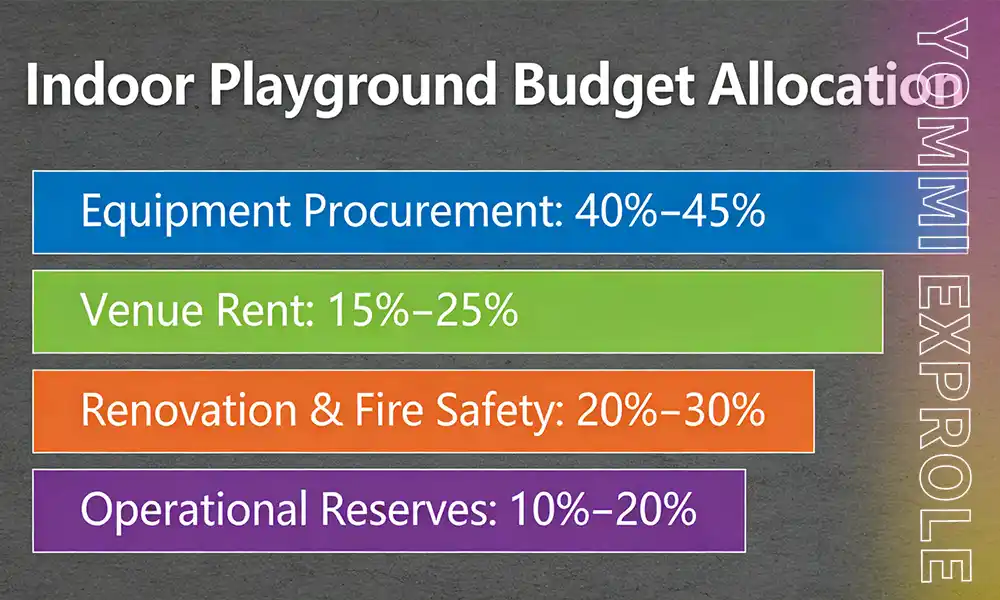
First-time investors always mistake the equipment price for the total investment, completely ignoring rent, renovation, fire safety, and operational reserves. You look at a quote for $100,000 and think you only need $120,000 in the bank. You are wrong. If you build your plan this way, you will fail. Actually, the golden ratio for your capital allocation should be exactly this:
•Equipment Procurement: 40%–45%
•Venue Rent: 15%–25%
•Renovation & Fire Safety: 20%–30%
•Operational Reserves: 10%–20% (At least 3 months)
Pay close attention to the last point. I believe cash reserves must be set aside in advance. Otherwise, it's easy to experience cash flow problems, ultimately leading to bankruptcy. You need funds to pay employee salaries, maintain daily operations, and conduct marketing campaigns during off-peak seasons. If your business plan cannot guarantee three months of operating cash flow, do not sign a lease agreement.
The Ceiling Death Line: Stop Worrying About Pillars
When clients send me floor plans, they always panic about concrete pillars in the middle of the room. Let me tell you the truth: actually, having too many pillars is not the main problem. Pillars can be bypassed through custom design or integrated directly into the soft play structure.
But they do cause one issue: having too many pillars easily prevents you from placing high-value equipment like long slides or ninja courses.
However, insufficient height is an absolute dealbreaker. You cannot fix a low ceiling. If you want a profitable 3-level soft play structure inside your commercial indoor playground, here are the exact metrics you need:
•Ideal Height: ≥ 5.0 meters
•Bottom Line: ≥ 4.5 meters
•Danger Zone: < 4.5 meters
•Death Line: < 4.3 meters
If the ceiling height is insufficient, there are two solutions, but both will negatively impact business.
•First, you could reduce the height of each floor to 1.2 meters, but this would significantly narrow the target age group, as older children would be unable to enter.
•Second, you could reduce the number of floors to a two-story playground, but this would severely impact capacity and ticket revenue.
Therefore, I recommend choosing a site with a minimum clearance height of 5 meters.
Fire Safety Compliance: The Cost of Cheap Materials
You want to save a few thousand dollars by buying non-certified equipment from a cheap local supplier? Let me tell you a real story from our factory.
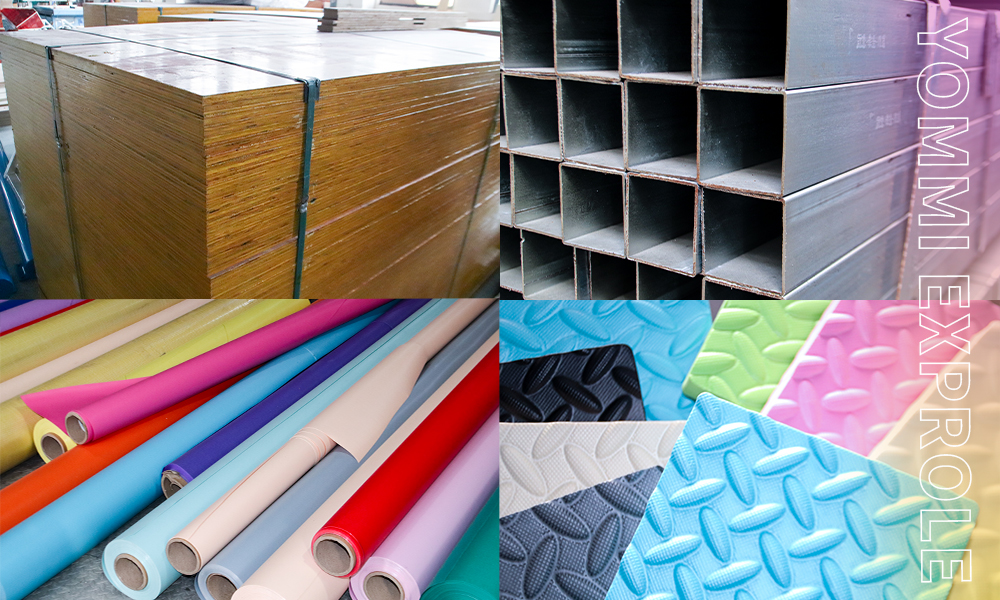
For your indoor playground to open smoothly, you must ensure you choose a factory with European or American export certifications (i.e., ASTM or CE standard certifications).
I had a Southeast Asian client who used cheap materials to save costs. He ignored my warnings and bought inexpensive but non-compliant PVC and foam materials. The result? They failed the fire safety inspection. Ultimately, they couldn't open. The government ordered them to shut down. They had to dismantle all the cheap equipment and repurchase certified materials.
Fire safety is not a joke. The outcome is either compliance or closure.
The ROI Reality Check: 500㎡ Baselines
Stop putting a 3-month Return on Investment (ROI) in your pitch deck. No investor will believe you, and I certainly do not. Let’s look at a standard 500㎡ (about 5,300 sq.ft) venue.
Here is the factual payback cycle for a 500㎡ standard venue:
•Ideal: 10–14 months
•Normal: 12–18 months
•Poor: > 24 months
To achieve these goals, you must understand the maximum capacity of your venue. Never overcrowd an indoor playground. Typically, a venue should accommodate one person per 3-5 square meters. Therefore, a 500-square-meter venue has a maximum capacity of approximately 100-160 people. If you cram 200 children into this space, safety incidents will occur, the air conditioning will malfunction, and parents will leave negative reviews.
Zoning Secrets: The Toddler Cash Cow
I see it happen every day. Novices are always willing to spend a lot of money doing thrilling projects, completely ignoring the toddler area. They want massive drop slides and extreme trampolines.
Listen to me: the most profitable ratio for your space is this
•Toddler Area (0–5 years old): 20%–30%
•Comprehensive Play Area: 45%–55%
•Challenge Zone (Ninja/Climbing): 15%–25%
Why? Because the toddler area has major importance: long stay times and stable ticket values. Teenagers come once a month. Mothers bring their 2-year-olds three times a week on Tuesday mornings when the park is empty. The real source of profit is not thrill, but a "stable customer base." You build the extreme zones for marketing, but you build the toddler zone to pay your mortgage.
The Core Equipment: What Actually Makes Money
Do not fill your park with cheap plastic toys that kids get bored with in five minutes. When writing your equipment list, focus on what actually draws a crowd.
The real cash-cow equipment is: large slides (specifically dry snow slides) and ball pools combined with interactive equipment.
Dry snow slides give kids an adrenaline rush they cannot get at a public park.
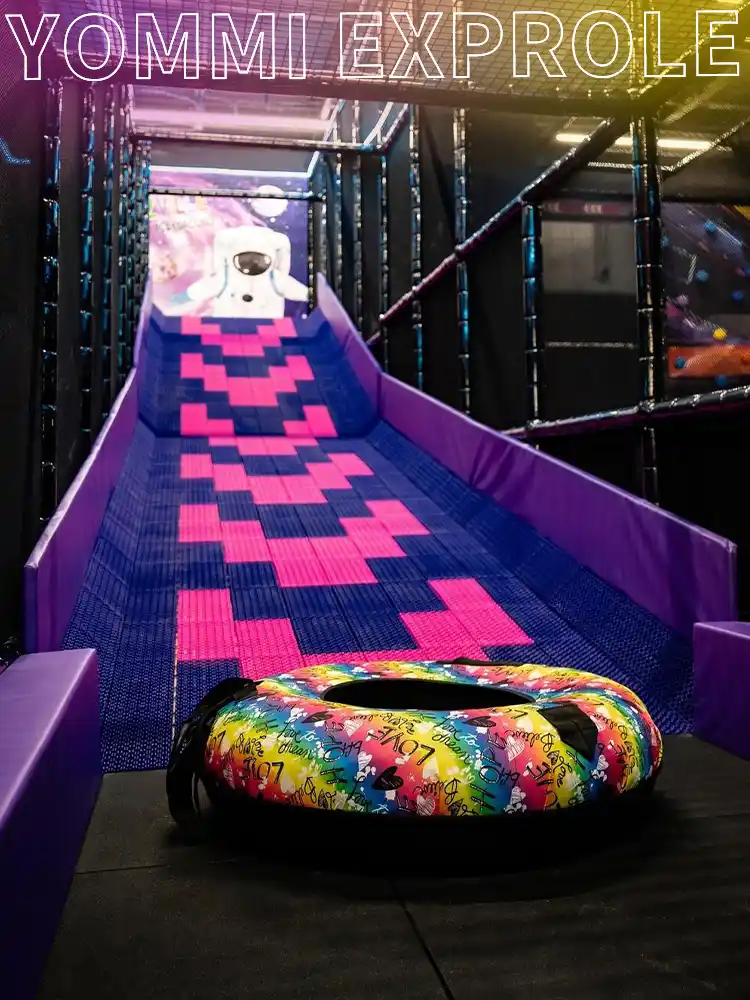
Interactive ball pools keep them engaged with screens and targets.
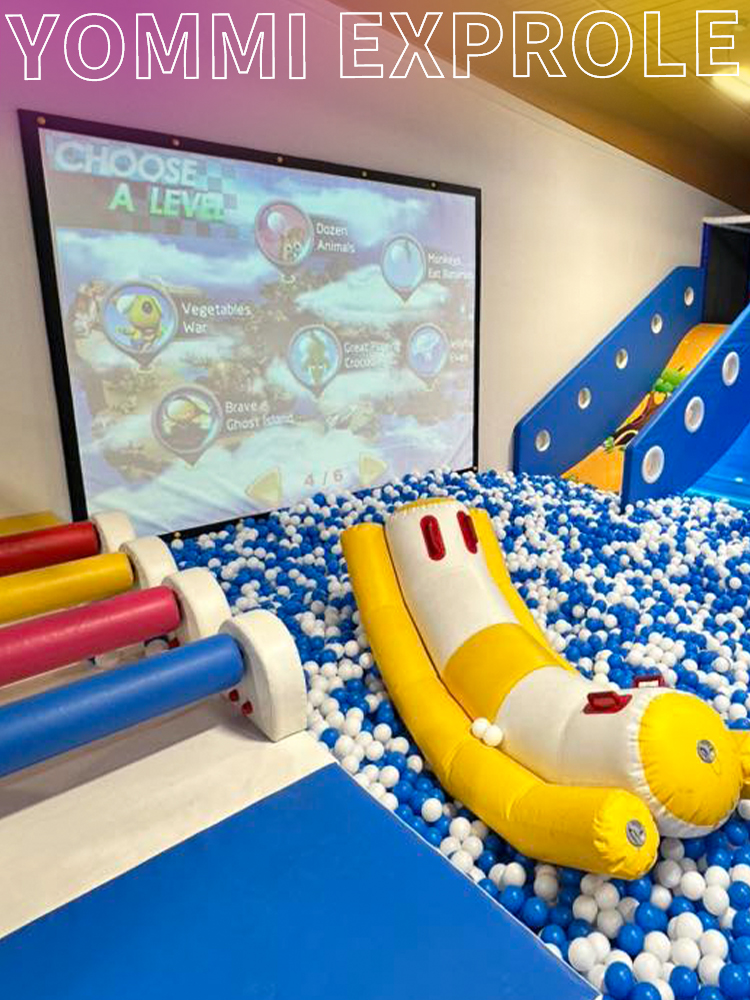
As a premium commercial indoor playground equipment manufacturer, we engineer these specific three attractions to handle massive daily abuse while looking spectacular. Put your money here.
Secondary Consumption: The Hidden 50% Margin
If your financial model only calculates selling entrance tickets, your business will starve. A normal and healthy revenue structure should look exactly like this:
Tickets: 50%-60%
Party Rooms: 15%–25%
Retail (Snacks and Beverages): 15%–25%
The profit margin actually does not mainly rely on tickets, but on secondary consumption. You pay rent and staff with ticket sales. You buy your Ferrari with secondary consumption. The focus of your profit margin should be on party rooms and retail, which sit at around 50%. A mother will complain about a $20 entry ticket, but she will blindly swipe her credit card for a $500 birthday party package. Build high-end, themed party rooms. They are your ultimate profit engine.
The Installation Nightmare: Factory vs. Local Builders
Are you considering hiring local construction workers to install our complex steel structures in order to save on airfare costs? Below is a detailed analysis comparing on-site installation versus factory installation.
Here is the truth: local construction costs are low, but the time is unstable, and the error rate is high. Conversely, factory team construction costs are high, but the time is controllable, and the error rate is low.
The exact points where local installation teams overturn are wrong installation sequences and deviations in understanding safety standards. The most serious consequences are structural hidden dangers, forced rework, and delayed opening. Every day you delay your opening, you are bleeding rent money. As a top-tier indoor playground manufacturer, we send our factory veterans to fly to your site. We do it right the first time.
Maintenance and Depreciation: The 5% Survival Rule
Nothing lasts forever when hundreds of kids are stomping on it daily. General factory warranties range from 1 to 5 years. Under high-intensity use, if the equipment is bought from a reliable factory initially, there won't be major problems in the first year.
But you must plan for the future. Starting from the second year, you must reserve 5% of the total equipment price as an annual equipment maintenance cost. You will need to replace worn PVC covers, broken zip ties, and stretched trampoline mats. At this time, the factory's warranty period becomes especially important. If you bought from a shell company that disappeared, you have no spare parts. Budget this 5% into your business plan right now.
Slaughtering the Competition: Differentiation Over Price Wars
What do you do if you find the perfect location, but there is a massive competitor nearby? If you have an opponent within 5 kilometers, you should not compete with them on price or area. That result is undoubtedly lose-lose. You drop your ticket price by $5, they drop theirs by $5. You will fail.
Instead, you must plan differentiated competition. Here is how:
•Age Segmentation: Cut the market. Only target 0-6 years old, or only 6- 12 years old, facing different age groups.
•Thematic Differences: Make thematic differences by adopting different IPs or scenarios. If they have a jungle theme, you build a futuristic space station.
•Strong Operations: Do strong operations by setting up a preferential membership system to retain long-term customers. Lock them into monthly subscriptions.
Finally, I want to say this industry is not about fighting over who has the most equipment. It is about fighting over location + cash flow + repurchase ability. Master those three, and your indoor playground will dominate the market.
Hardcore B2B FAQ
Q: If I find a great building, but it has many concrete pillars, should I reject it for my indoor playground business plan?
No. Actually, having too many pillars is not the main problem, but ceiling height is. My Experience: I have told hundreds of investors not to panic over pillars. Pillars can be bypassed through custom design or integrated directly into the soft play structure. The real killer is a low ceiling. Insufficient height is an absolute dealbreaker. If your height is under 4.3 meters, that is the death line. You are forced to reduce the number of levels and build a 2-level playground, which ruins your revenue potential.
Q: Should I spend the majority of my equipment budget on extreme thrill rides for teenagers?
No. Novices are always willing to spend a lot of money doing thrilling projects, completely ignoring the toddler area.
My Experience: Extreme rides look great on a brochure, but the toddler area has major importance: long stay times and stable ticket values. If you do not dedicate 20%–30% of your space to children aged 0-5, you are throwing away your most loyal customers. The real source of profit is not thrill, but a "stable customer base" of mothers bringing their young children multiple times a week.
Q: Can I just rely on daily ticket sales to hit my ROI targets?
No. The profit margin actually does not mainly rely on tickets, but on secondary consumption.
My Experience: If you only sell tickets, you are barely surviving. A normal and healthy revenue structure requires tickets to only be 50%-60% of your income. The focus of your profit margin should be on party rooms (15%–25%) and retail snacks and beverages (15%–25%). These secondary channels sit at around a 50% profit margin and are the real reason successful parks achieve a 10–14 month ideal return on investment.